
“There are enough memories to fill a book.”
By Nicklas Rudolfsson, July 2026
Ole Bang has worked behind the scenes in the heavy metal world for more than four decades. Throughout his career, he has worked with legendary artists such as Mercyful Fate, King Diamond and, for many years now, Candlemass.
For Candlemaniacs, Ole shares his story, explains what goes on behind the scenes when booking shows, tours and festivals, and reflects on a lifetime in heavy metal.
1. You’ve spent decades working behind the scenes with some of heavy metal’s most respected artists. Looking back, how did your journey into the music business begin, and did you ever imagine it would become a lifelong career?
Ole Bang:
It happened almost by chance.
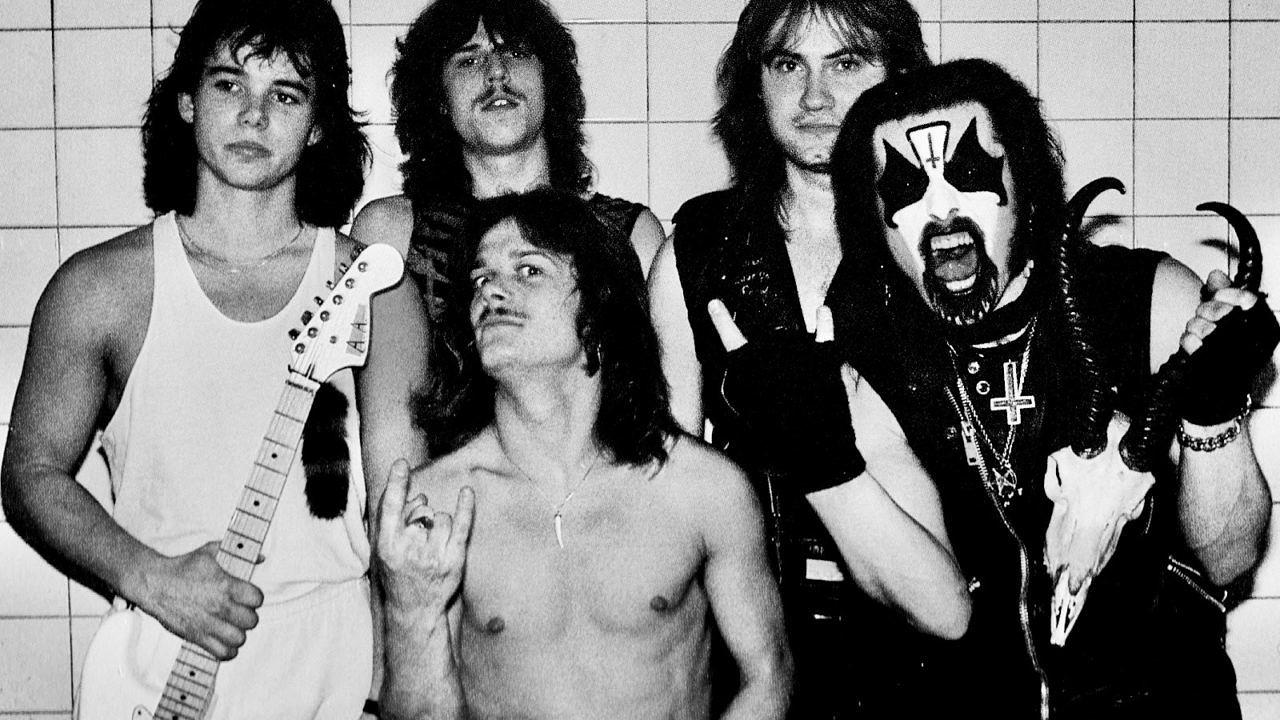
I was interested in photography and went to see Judas Priest in Germany on their 1980 British Steel tour. On the train home, I met Hank Shermann, who noticed my camera equipment. He asked me to photograph his band, Brats, and we started spending time together. I often visited their rehearsal room and went to their shows, and hung out as they developed into Mercyful Fate.
One day, they received an offer to record in the UK, so I went to a travel agency, bought tickets to London, and attended their first proper recording session. After that, I helped with everything that was not directly related to the music, e.g. travel planning, road work and accounting.
And no, I never imagined it would last 40 years and become my life’s career.
2. You’ve worked with artists such as Candlemass, King Diamond and Mercyful Fate throughout your career. Are there any early memories or defining moments that still stand out to you today?
Ole Bang:
There are too many to mention, and I actually also worked with a large number of major foreign acts since I also got hired as promoter rep for a major Danish booking agent; but the first US tour with Mercyful Fate in 1984 was an amazing experience, and opening with MF for Metallica at major venues also stands out.
The first full production shows with King Diamond in three large arenas in Spain are highlights I remember fondly.
Also, the first shows in South America still bring back great memories, and every time I return to that region, I think back to those very first concerts.
All in all, there are enough memories to fill a book.
3. How did you first become involved with Candlemass, and what was your initial impression of the band and the people in it?
Ole Bang:
I had known of Candlemass since their classic first album.
They had toured as support with Savatage on the King Diamond 1988 Europe tour, and they all seemed like nice guys, although I did not really know them personally at the time.
That changed in 2002, when Messiah contacted me directly and asked if I would get involved in the band’s reunion. I was not aware of any major internal problems, but I was told that handling everything themselves was not working. I had a few meetings with them and then got to work.
4. Most fans only see the finished result – a tour announcement or a festival poster. Can you walk us through what actually happens behind the scenes before a Candlemass show or tour is officially confirmed?
Ole Bang:
Booking a show involves several behind-the-scenes steps before it can be announced, and even after the announcement there are still many details to finalise before the band goes on stage.
These days, Candlemass usually do not tour extensively; in most cases, they fly in for individual shows or festivals.
Put simply, the first step is to confirm that all five band members are available on the date proposed by a promoter. After that, we negotiate the financial terms and any additional arrangements. An offer may or may not include hotels, transport, backline and other essentials, so everything must be agreed in advance.
Performance time and other practical details also need to be settled to make sure the day of the show runs smoothly, without discussion, arguments or disappointment on either the band’s or the promoter’s side. When all the details are confirmed, an announcement date is set.
Once that is in place, or sometimes while negotiations are still ongoing, we check that our preferred crew members are available, book flights and, when needed, hotels. The tour manager then follows up on the specific details. In 99% of cases, that preparation results in a great show day for everyone involved.
When we are touring more than one show, all of this obviously requires even more planning and coordination.
5. What are the biggest factors when deciding whether a tour, festival or individual show is the right fit for Candlemass? Is it mainly business, or does the band’s history, audience and reputation also play an important role?
Ole Bang:
We rarely get offered shows in places where Candlemass would not fit. Promoters usually know exactly what they want to book, and they have no interest in putting a doom rock band on at a techno festival, to put it simply.
So it mainly comes down to the band’s availability and the financial terms, but also to the position offered, for example at a festival.
Candlemass would not be interested in opening the main stage at 11 o’clock in the morning, when most people are still in their tents or queuing for showers. For the record, we have not been offered that kind of show time either.
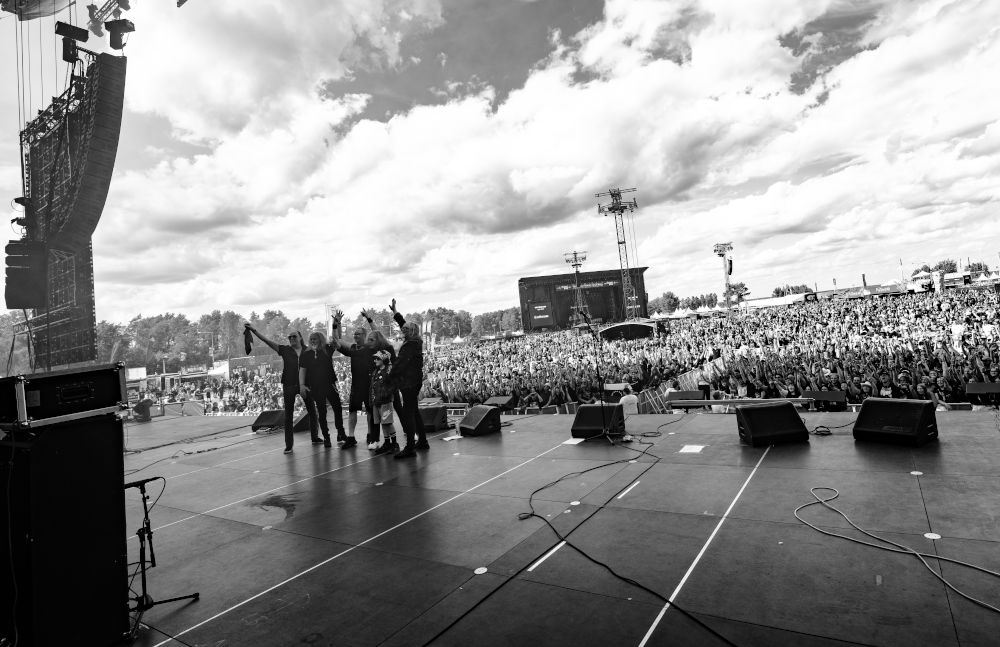
Candlemass at Sweden Rock Festival 2026, photo by Linda Florin
6. Fans often ask why Candlemass visits certain countries regularly while others have to wait years. Without giving away any trade secrets, what usually determines where the band ends up playing?
Ole Bang:
In general, it depends on when and where a promoter wants to book a Candlemass show. We may want to play a particular country or city, but if there is no local interest, or no confidence that enough tickets will sell, it will not happen.
In other places, we are invited back repeatedly because it makes good business sense for the promoter or festival, which again indicates a very good fan base.
But a lot of it comes down to business. With a band that has been together for 40 years, age naturally plays a part in decision-making. The members also have families, children and other commitments, so we are not trying to break new ground purely for fun or promotion, as we might have done in the early years.
7. Every tour has its unexpected moments. Without naming names if necessary, what’s one memorable challenge you’ve had to solve that fans in the audience never knew anything about?
Ole Bang:
This was not related to Candlemass, but I was once involved as tour manager in a large theatre production, playing arena-sized venues across Europe.
We had to replace a main performer without much warning. One of the principals had unfortunately fallen ill overnight (food poisoning), and I found out about this at 10 o’clock on the morning of the show.
We then had to arrange and fly a stand-in to the city of the show before stage time. It was a sold-out show for more than 12,000 people, so cancellation was not an option.
It was a stressful day, with a lot of planning, including overtime for the costume department. Flights and local transport all had to come together, and they did. The show started on time, and no one in the audience noticed anything.
8. The live music business has changed enormously since the 1980s. From your perspective, what are the biggest differences between booking tours back then and doing it today?
Ole Bang:
Back then, I worked with younger bands, and the drive was different. The focus was on breaking through and gaining recognition.
Booking was done by phone and later by fax, so everything moved at a slower pace. Today, almost any information you need is at your fingertips online, along with plenty of useless and distracting input.
What we now call social media was once print media: paper photos, physical posters and printed announcements for shows.
Accounting was also very different, with real tickets and no electronic back-up or control systems. Cash was often the main method of payment, and here in Europe each country had its own currency.
9. Candlemass has now reached an incredible 40-year milestone. In your opinion, what has enabled the band to remain one of the world’s most respected doom metal acts after all these years?
Ole Bang:
Candlemass created doom metal.
The band’s longevity is largely due to the strength of Leif Edling’s songwriting and the uncompromising quality of their live performances.
The drive from fans is also a significant factor.
10. Finally, what would you like to say to the Candlemaniacs community and the loyal Candlemass fans who continue to support the band around the world?
Ole Bang:
I am honoured to still be able to support Candlemass in their efforts to keep the doom movement alive.
Their success is, of course, largely due to their loyal fans, and new fans will soon understand why Candlemass remain a classic, standard-setting band.
Interview by Nicklas Rudolfsson for NIRUZINE and Candlemaniacs forum, July 2026.