
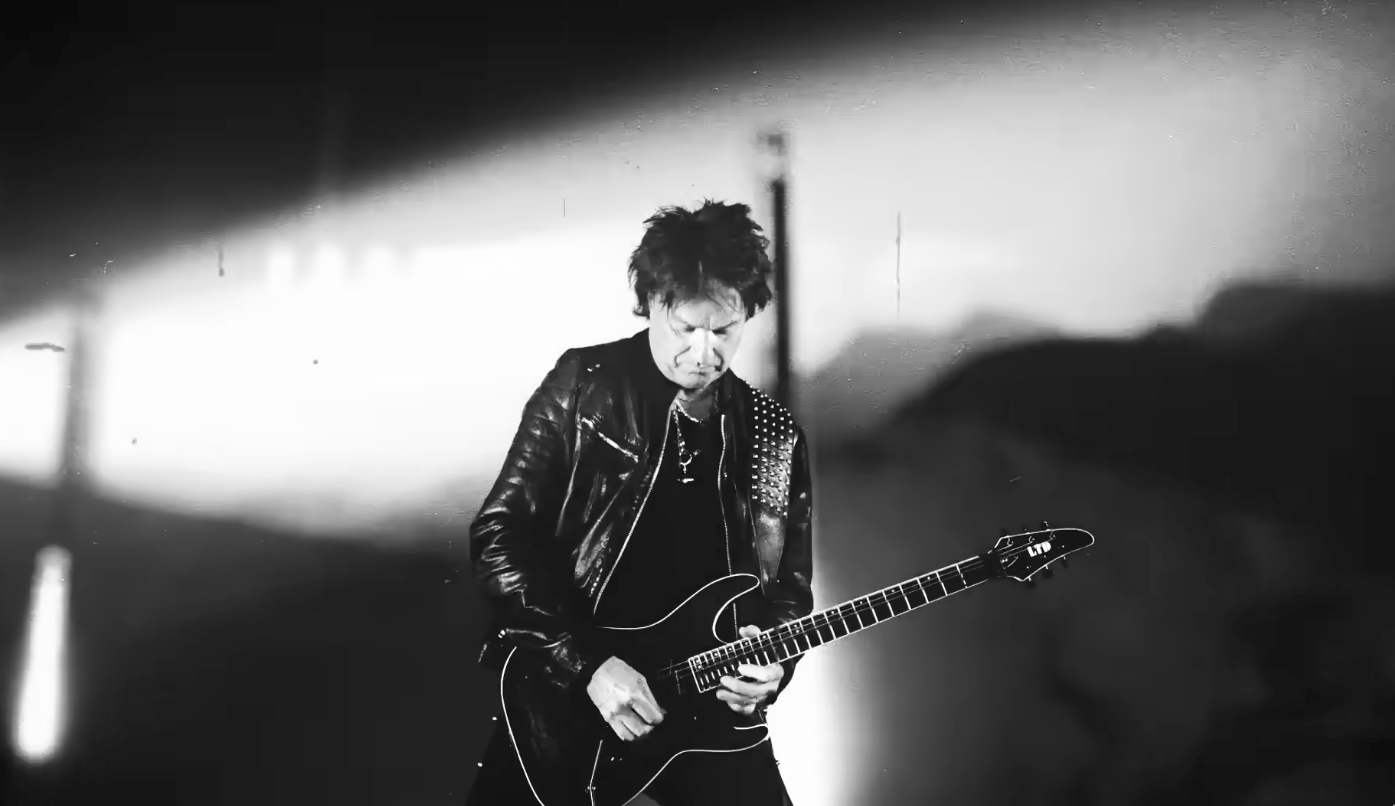
“Melody is the key to everything.”
By Nicklas Rudolfsson, August 2026
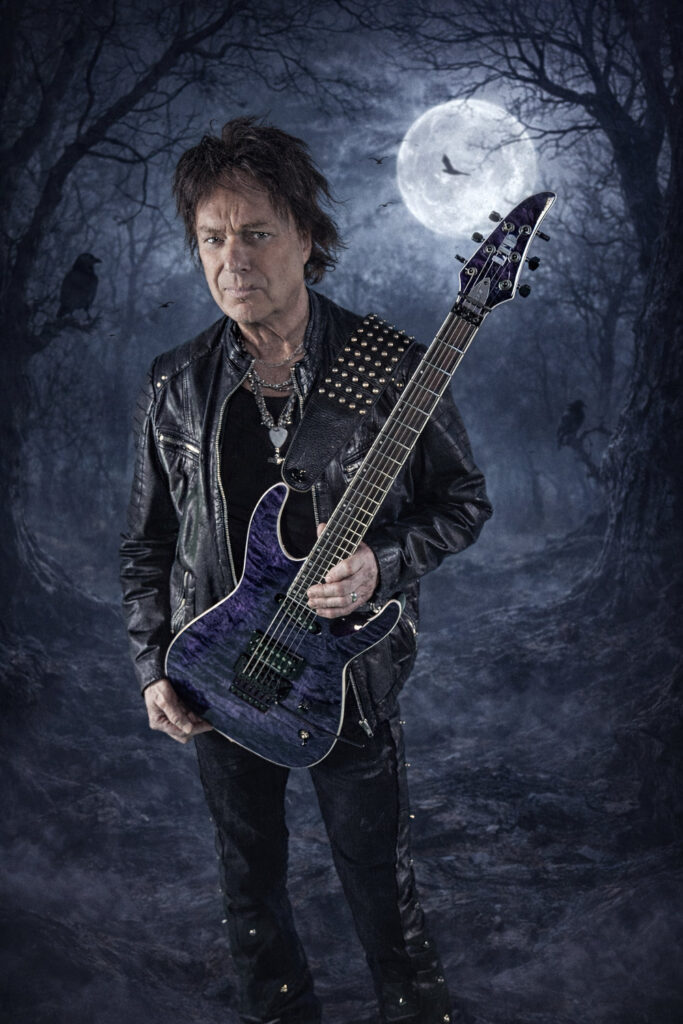
Few guitarists have left as deep a mark on heavy metal as Andy La Rocque. For more than forty years, he was an integral part of King Diamond, helping shape some of the genre’s most iconic albums while establishing himself as one of metal’s most distinctive lead guitarists. Beyond his work on stage, Andy has also spent decades producing countless albums at Sonic Train Studios, earning equal respect behind the mixing desk.
Having recently closed the King Diamond chapter, Andy is now fully focused on Lex Legion, the new band he has built together with longtime friends and collaborators, while continuing his work as producer and engineer at Sonic Train Studios.
In this interview, Andy reflects on the long road that led to Lex Legion, closing the chapter on more than four decades with King Diamond, songwriting and producing, memorable collaborations, the art of crafting guitar solos, artificial intelligence in music, and the story behind his ESP LTD ALR-II Signature guitar and current rig.
1. Lex Legion brings together musicians who have shared history for decades, yet the album does not feel like an exercise in nostalgia. It sounds confident, focused and very much alive. At what point during the writing process did you realise this had become a real band with its own identity rather than simply a reunion of old friends?
Andy La Rocque:
I mean, the process of writing songs with Lex Legion took some time, actually, because we started back in 2008. At that time we didn’t really realise that it would become an album so many years later.
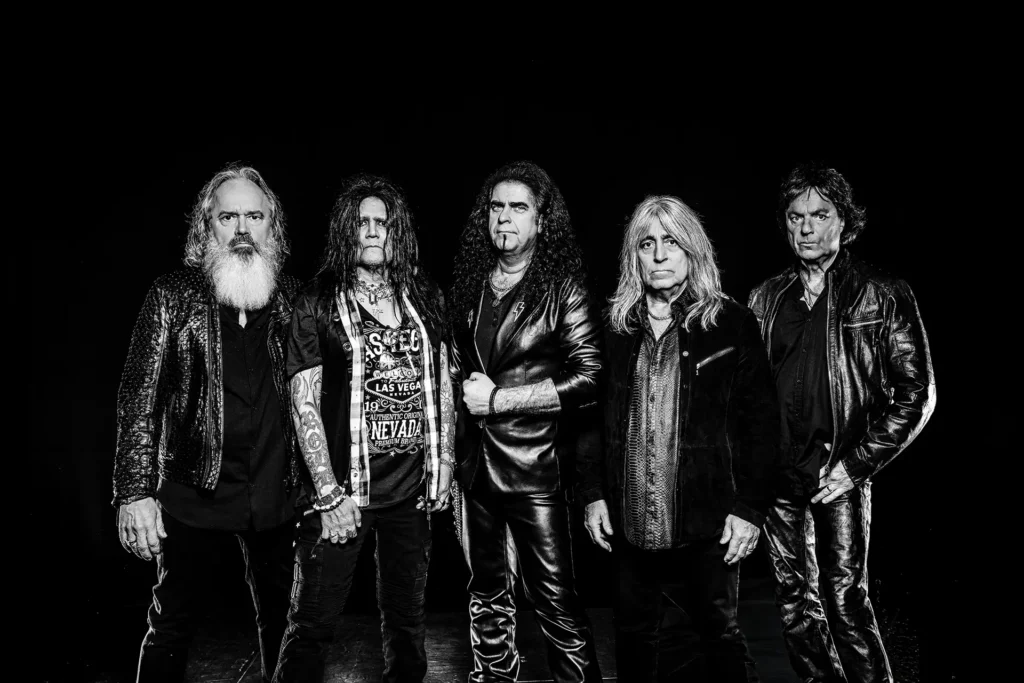
It all kind of restarted in 2021 during the COVID pandemic, when Pete played a few songs for Mickey. Mickey thought they sounded great and said, “Hey, let’s call Hal and Andy. We want to involve them in this.”
We worked on the songs for a couple of years, and it took quite a while until I realised that this would become a real band with its own identity. Even though we’re old friends having fun together writing music, it wasn’t until the very end of 2025 that I thought, “Wow, this is a real band.”
That’s also when we came up with the name Lex Legion, around New Year’s 2025 going into 2026. So for me, it definitely took some time before I realised this had become a band with its own identity.
2. You have said that none of the material on Lex Legion comes from unused ideas written for other bands. When you sit down with a guitar, how do you recognise that a riff belongs to Lex Legion? Is it a conscious decision, or does the music somehow reveal its own destination?
Andy La Rocque:
To me there’s always been a very clear border between the songs I wrote for King Diamond and the material for Lex Legion.
It’s not completely different, but the thinking behind it is. With Lex Legion we tune down slightly, so I use a different guitar for those riffs. That immediately brings out different ideas that fit Lex Legion.
It has nothing to do with the music I wrote for King Diamond. They’re two totally different things, and none of the songs on Lex Legion are reused or recycled from material written for King Diamond.
3. Over the years you have collaborated with an incredible range of musicians, from Chuck Schuldiner and Death to At the Gates and countless others. Was there ever one collaboration that fundamentally changed the way you think about music, creativity or even yourself as a musician?
Andy La Rocque:
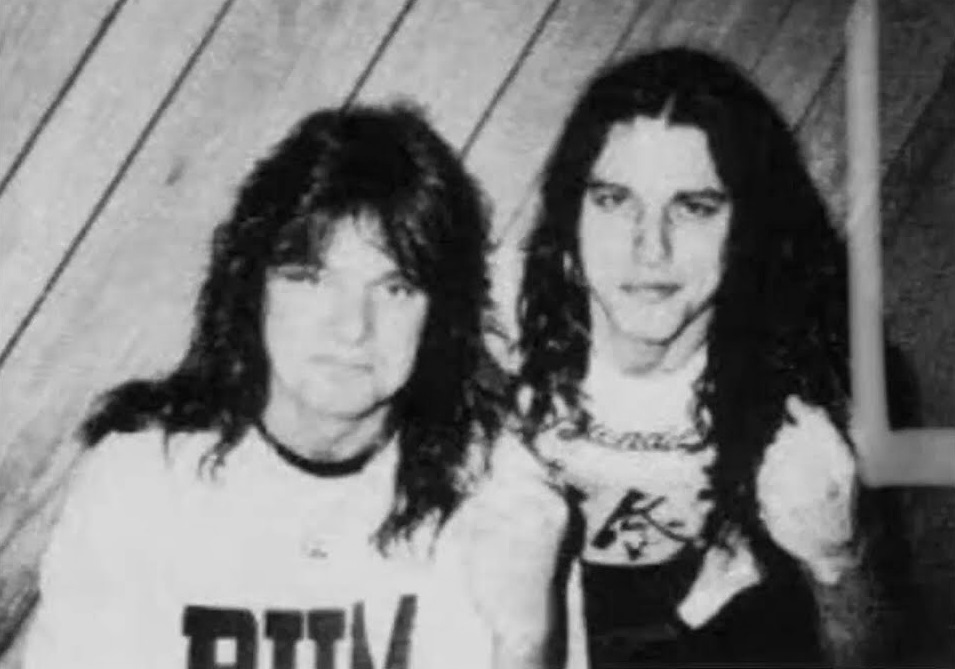
People still talk about the Death album Individual Thought Patterns, and of course that’s very inspiring because it was something very different from what I had been doing before.
At the time King Diamond wasn’t very active, so I thought, “Let’s try something different.” It’s great that people still talk about that album.
The same goes for At the Gates, Slaughter of the Soul, and the solo I recorded for “Cold”. People still come up to me and say, “That solo is so cool.”
Hearing things like that is always inspiring, and it can still motivate me when I’m writing a solo for a completely different project.
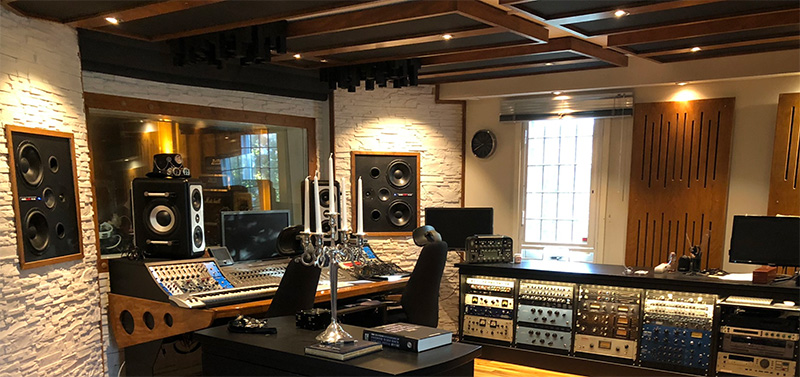
4. Sonic Train Studios has become almost as legendary as your guitar playing. After producing so many albums, have you discovered one common mistake that even experienced bands continue to make? If every band could learn one lesson before entering the studio, what would it be?
Andy La Rocque:
The most common mistake musicians make before entering the studio is not being familiar enough with what the other band members are actually playing.
Very often someone says, “Oh, do you play it like that? Well, then I can play this instead.”
They need to understand what’s happening throughout the entire song instead of focusing only on their own instrument.
They need to listen to the whole picture. That’s a very common mistake, and it would save a lot of studio time if everyone rehearsed together and really knew what was happening around them.
5. Your guitar solos have always stood apart because they seem to tell a story instead of simply demonstrating technique. When you build a solo, are you thinking like a guitarist, a composer or perhaps almost like a film director shaping the emotional climax of a scene?
Andy La Rocque:
When I’m writing a solo, melody is the key to everything.
It needs to contain something you can actually sing after you’ve heard it. At least part of the solo should have a memorable melody or hook.
The way I approach it can change from song to song. Sometimes it’s like riding a roller coaster. Sometimes it’s like writing a song within the song. Other times it’s almost like writing a soundtrack inside the song.
It all depends on the feeling and mood of the music. I always try to combine strong melodies with some technical playing, and I think that combination works best.
6. Technology has transformed almost every aspect of making music. Artificial intelligence, digital recording and home studios have made creating albums more accessible than ever. Which developments have genuinely inspired you as a musician and producer, and which ones do you believe have taken away some of the magic that once existed?
Andy La Rocque:
Technology has changed dramatically over the past thirty years, and especially during the last couple of years with AI.
Sometimes you hear something on the radio and don’t even realise it’s AI. It’s just a fucking good song.
If musicians and producers use AI the right way, it can be helpful as a support tool.
But a musician is still a musician. It’s craftsmanship. You can’t replace a great guitar solo or a good riff with AI. If you do that, you’re totally wrong in my opinion.
An album should be played by musicians, not by AI.
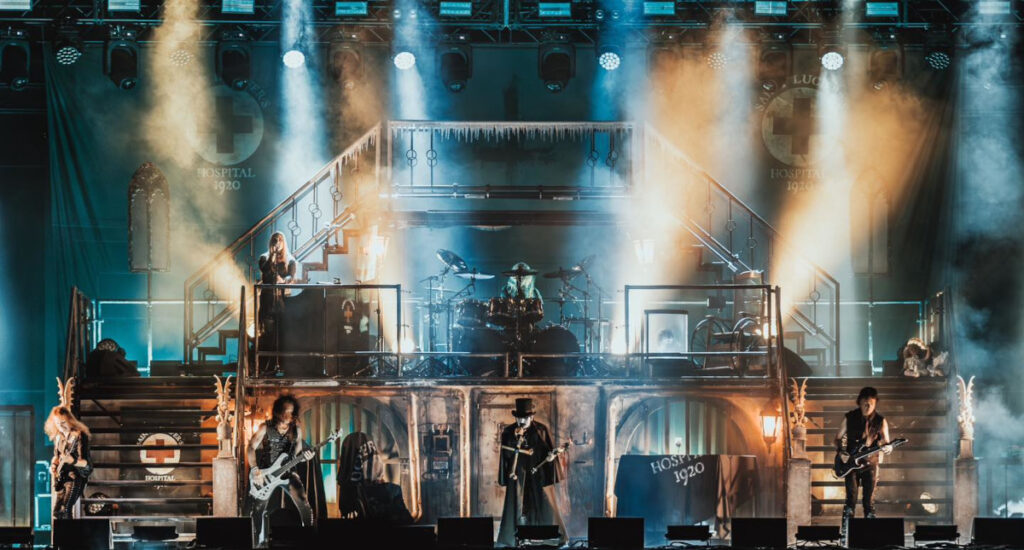
7. After so many years with King Diamond, you have now chosen to close one of the most important chapters of your career. Without focusing on headlines or rumours, what ultimately convinced you that the time was right to move forward? Looking ahead, what inspires you most about the next chapter of your musical journey?
Andy La Rocque:
When it comes to the classic King Diamond albums, I mean, we’re talking about maybe the first five ones, from Fatal Portrait to The Eye, I’d say I’m super proud of what we did back then.
I think it still sounds great. Great songs and a great feel overall on the albums.
What keeps me going as a musician is challenges in sound. That also keeps me going as a producer, because I’m always looking for something better and something new when it comes to sounds.
And also when it comes to songs, a little bit of a new style. That’s also why this Lex Legion band is moving forward, because we all have a strong drive to move forward with everything, and especially to do something that’s a little different from what we did before.
Even though you can hear the influences from the school we were born and raised in, I think this is a great step forward and very inspirational.
8. When people look back at your career many years from now, they will remember the legendary albums, the unforgettable solos and the productions. Beyond all of that, what do you hope musicians and fans will say was Andy La Rocque’s greatest contribution to heavy metal?
Andy La Rocque:
Well, when people look back in the future, I think my forty-one years with King Diamond have left a good mark on heavy metal history through the songwriting and the guitar solos.
Together with my work with Death and all the other bands I’ve been involved with, whether as a producer, guest guitarist or songwriter, I hope people will remember the whole package.
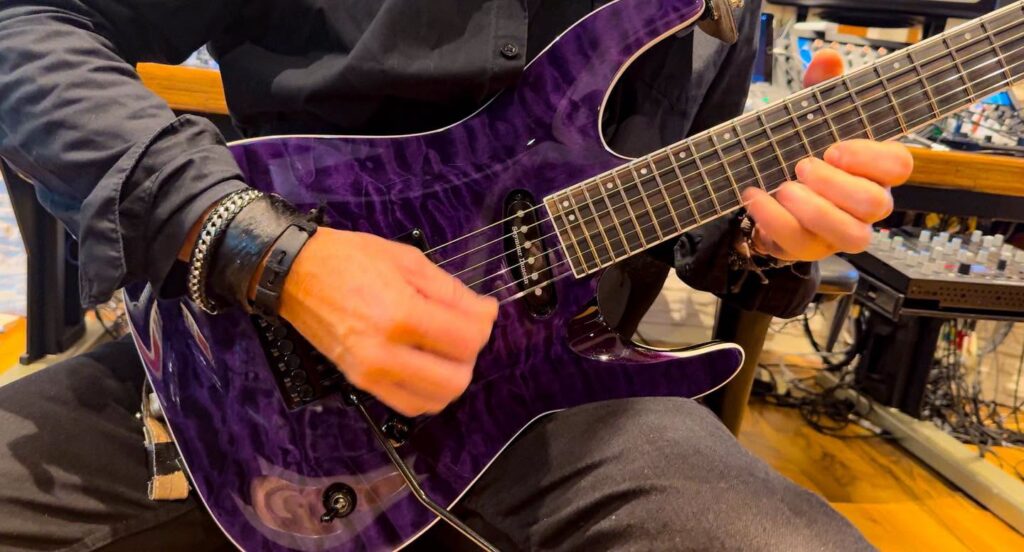
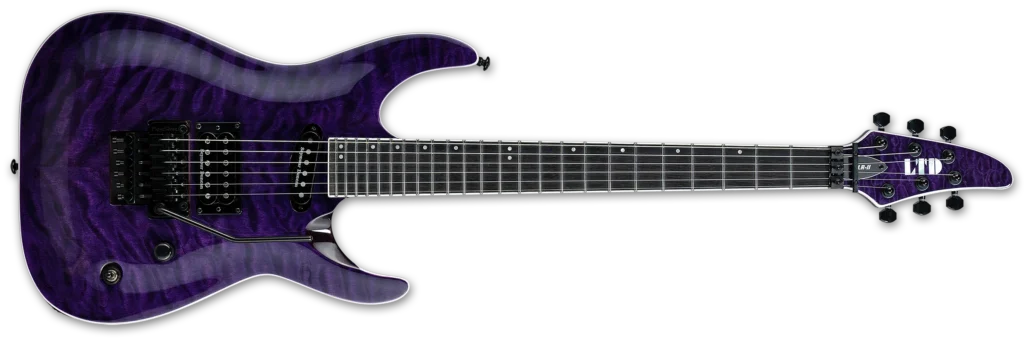
9. Your ESP LTD ALR-II Signature is much more than a guitar with your name on it. It reflects decades of experience as a songwriter, performer and producer, and every specification seems to have been chosen for a reason. Could you tell us the story behind how your collaboration with ESP began and how the guitar evolved into the ALR-II we know today? What were the most important choices you made regarding its scale, construction, pickups, tremolo and neck, and how do those details contribute to the way the guitar feels and sounds for you?
Andy La Rocque:
Well, my ESP journey started around 2017, I believe, when I met the rep for ESP, which was Chris Cannella at the time. Mike Wead, the other guitarist in King Diamond, had been playing ESPs for a couple of years. I picked up one of his guitars and said, “Wow, this is really good.” So I got a few guitars from Chris Cannella at ESP and tried them out on the next tour after that, and I just thought they were absolutely amazing.
Then it actually took a couple of years until I really knew exactly what I wanted. We started working on that, I believe, already before COVID. But then COVID came and stopped pretty much everything.
What I knew was that I wanted a 24.75-inch scale instead of the 25.5, because back in the ’80s I had a few Superstrats with that scale and I just loved it.
The second thing was that it should be a very light guitar, not as heavy as a Les Paul, for example.
It actually took a lot of work and refining to get to where that guitar is today, the ALR-II, Andy La Rocque II.
Everything from the tuners to the tremolo, and also the choice of pickups, which now is a Seymour Duncan JB and an STK-S6 in the neck position, which I just love.
The reason I chose the JB is because it has that singing note that I’ve been looking for for a long time.
I found an old Gibson Flying V in my possession that I tried out and said to myself, “Wow, this guitar just sounds amazing!” So I had to check the pickup in that one, and it was a JB. It just sounded great. That’s why I chose to have that in the Andy La Rocque Signature model.
The neck shape is also something that really matters to me, and the neck shape of the LTD ALR-II is exactly how I wanted it. It’s perfect in my opinion.
Overall, it’s much easier to play and bend strings, and easy to handle in every way with the 24.75-inch scale.
Great guitar, you should check it out!
10. After more than forty years as a professional guitarist, you’ve had the opportunity to try virtually every kind of equipment imaginable. Today you’re also officially partnered with several respected manufacturers whose products have become part of your sound. If you could invite us into Sonic Train Studios or onto the stage before a show, what would we actually find in your current guitar rig? Which guitars, pickups, strings, picks, processors, amplifiers and other essential gear do you rely on today, and what makes each piece irreplaceable? More importantly, what advice would you give to guitarists who are constantly chasing new gear instead of focusing on developing their own sound and identity?
Andy La Rocque:
Okay, my current, or recent, live rig is based on a Neural DSP Quad Cortex, where I have my presets.
I made some profiles from one of my favourite amps, which is the Marshall JVM, and also a Zuta pedal called the Duality, which is a very, very cool and slightly hyped overdrive pedal with a great noise gate in it as well.
Combined with the Marshall, it just sounds amazing. There’s a very special kind of bite in that pedal that makes it sound great.
When I did that profile, I had a Marshall JVM 50-watt amp and a Marshall cab, and I was using a Neumann FET 47 microphone going into an SSL mic preamp.
That’s basically what I’ve been using live for the last couple of tours.
What else can you find in my live rig? You’ll find Ernie Ball strings and Richter straps. As I said earlier, Seymour Duncan pickups, and Dunlop picks, for example. They’re really good.
I’ve been using the 1.14 mm Tortex picks for almost 35 years.
When it comes to strings, I used 9–42 with King Diamond, which is kind of standard tuning. With Lex Legion, I use a hybrid set, 9.5–44.
When you tune down a little bit, that’s the perfect choice for me.
And chasing new gear is a part of life, isn’t it? I’ve been chasing new sounds and new gear that sounds better than what I have for decades!
But I really have found what I like now, and one of my favourite amps is the Marshall JVM, which I think is fantastic combined with that Zuta Duallity pedal.
And in a few days I will also have the Zuta GBG 120 amp.
It’s customised for me with special tubes and a specially designed front. That’s also one of the absolute best amplifiers I’ve ever tried in my life.
So that’s going to be very interesting to try out in the studio, not only for me, but also for the clients who are coming in this fall.
Many thanks to Andy La Rocque for taking the time to answer these questions. Wishing him all the best with Lex Legion and Sonic Train Studios. The Lex Legion debut is an outstanding album, and I already look forward to its successor!
More information: andylarocque.com, sonictrainstudios.com, lexlegionofficial.com, ALR-II ESP Guitar @ NAMM