
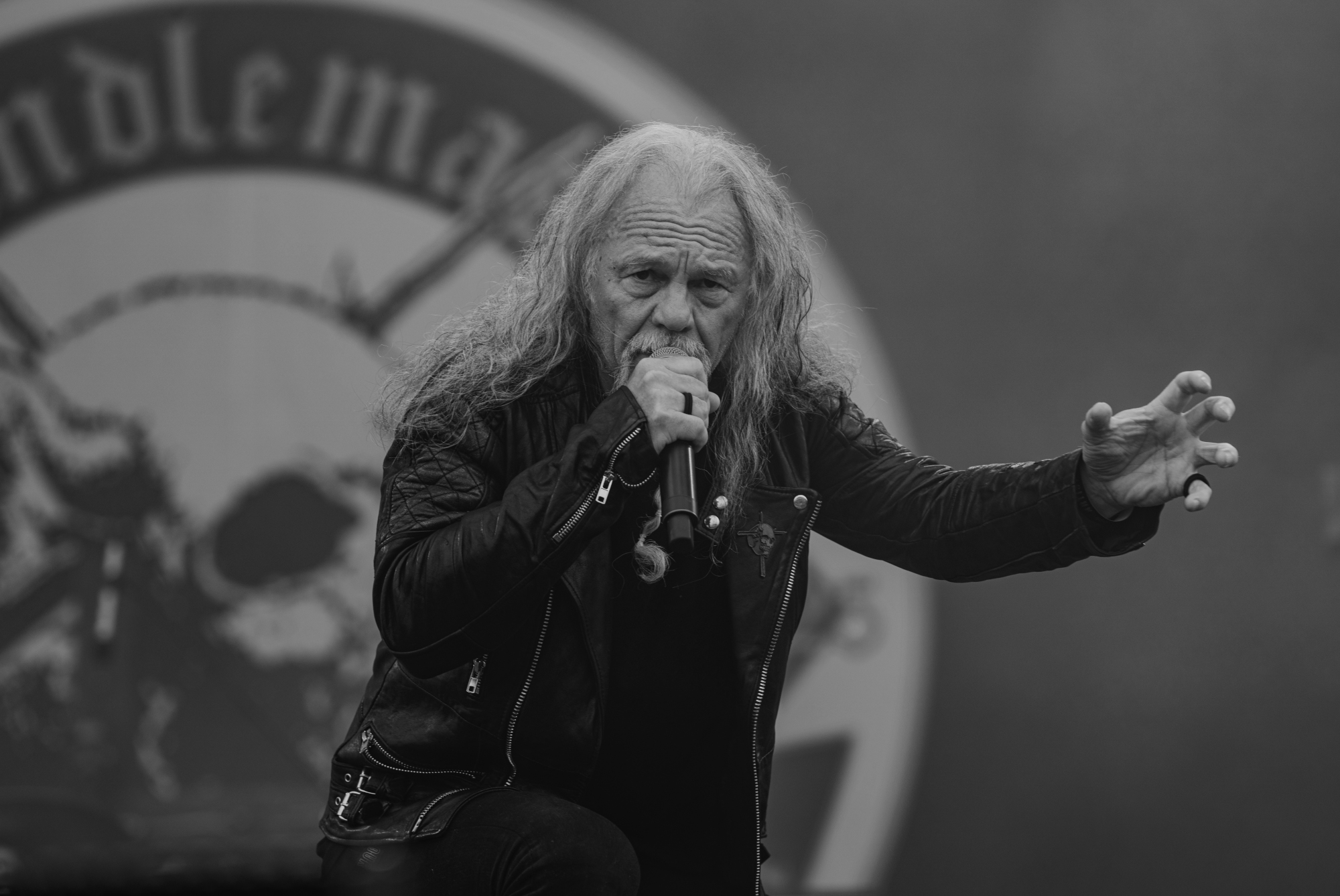
“Never, ever give up.”
By Nicklas Rudolfsson, September 2026
Some voices become inseparable from an album. Others become part of the history of an entire genre.
Johan Längquist belongs to both.
When Epicus Doomicus Metallicus was released in 1986, few could have predicted what the album would eventually become. Johan was not a permanent member of Candlemass at the time, yet his powerful and deeply emotional performance became forever connected to a record that would grow into one of the cornerstones of doom metal.
Then life moved on.
For decades, Johan remained outside Candlemass while the band continued through different eras, different singers and an extensive catalogue of albums. Music, however, never disappeared from his life. He continued writing songs, recording and performing on a smaller scale, sometimes quite literally sitting alone in a closet writing music.
More than thirty years after Epicus, the story took an unexpected turn when Johan was asked to return, this time as the permanent singer of Candlemass.
It is a remarkable circle to close, but Johan does not seem particularly interested in treating it as nostalgia. There is still music to make, songs to sing and, perhaps most importantly, the same sense of curiosity and playfulness that was there in the beginning.
In this interview for NIRUZINE, Johan Längquist reflects on Epicus Doomicus Metallicus, returning to Candlemass, the youthful spontaneity he still tries to preserve, his own songwriting, favourite Candlemass albums from the years when he was absent, early punk influences, Ronnie James Dio, Rob Halford, Geoff Tate and the simple philosophy that has followed him throughout his life in music.
A note before the interview
This interview was conducted a few weeks ago. Since Johan answered these questions, circumstances have unfortunately changed.
Johan was unable to perform with Candlemass at London Metalfest after being hospitalised in Stockholm following a medical emergency. With very little time to prepare, Candlemass went ahead with the show using guest vocalists.
At the time of writing, I have no further information about Johan’s current condition, and I sincerely hope that he has recovered and is doing well. If he is still recovering, I wish him all the strength he needs and a full and speedy recovery.
Thank you again, Johan, for taking the time to answer my questions.
I hope that epic voice will be back where it belongs very soon: on stage.
Get well, Johan!
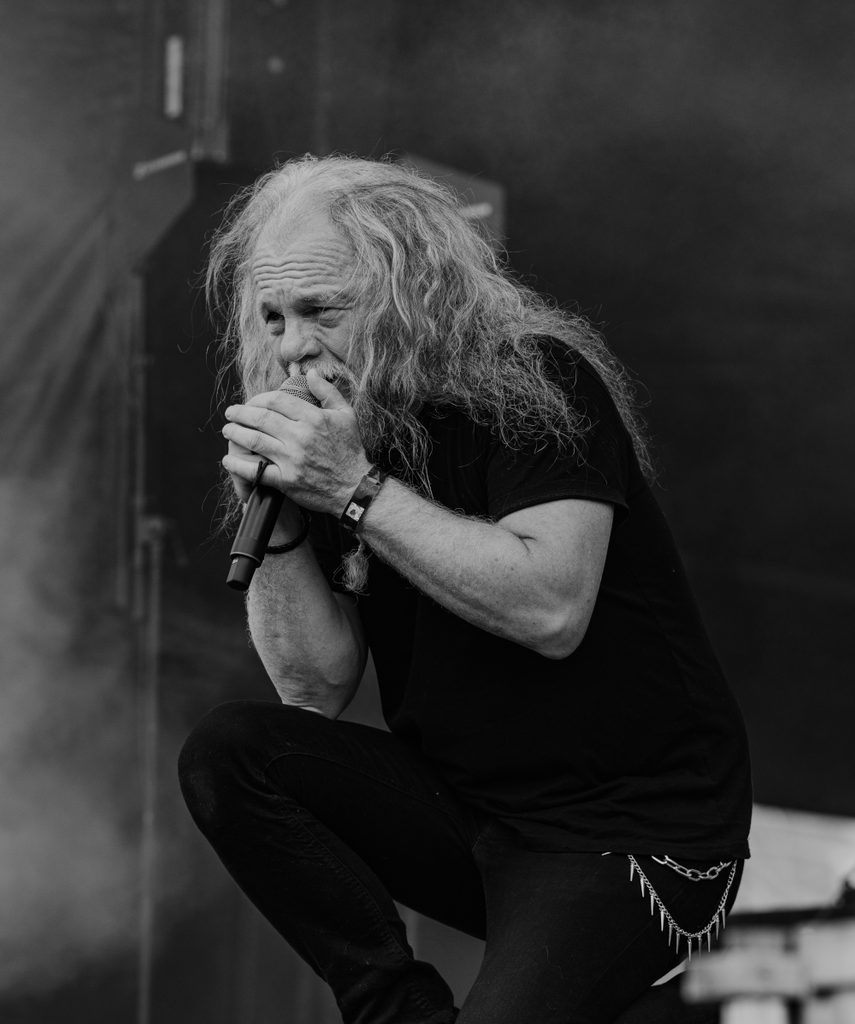
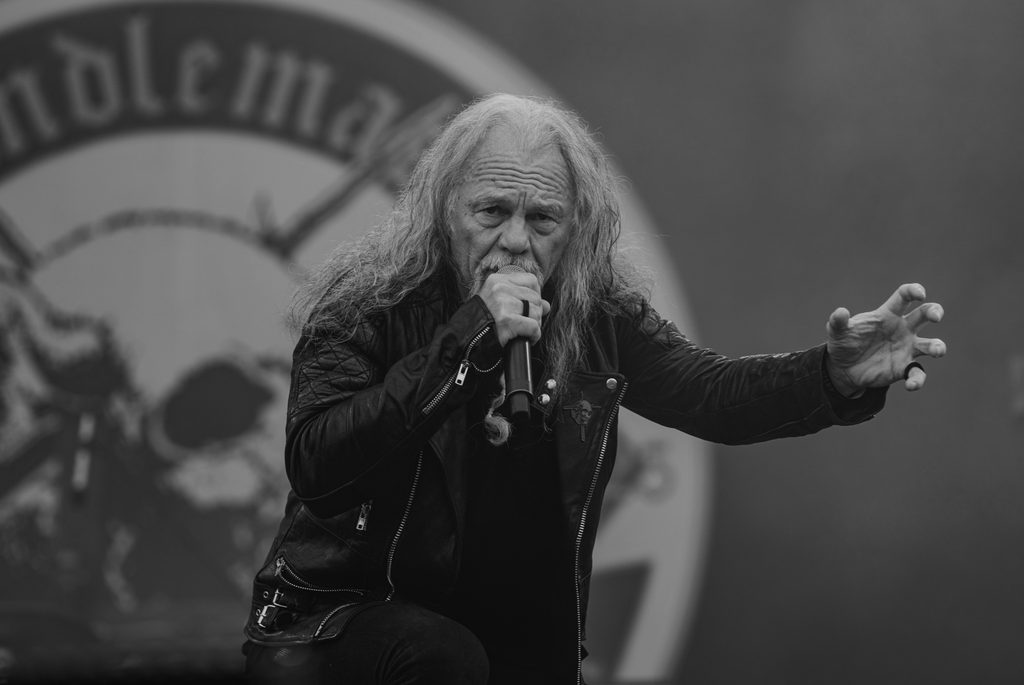
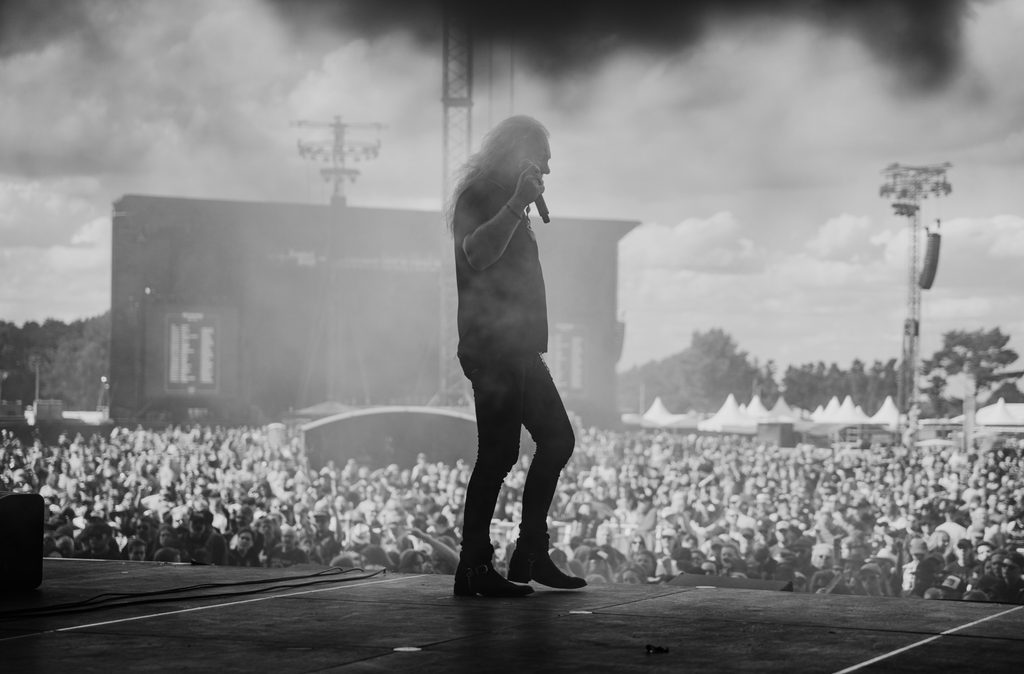
Photos from Sweden Rock Festival 2026, Linda Florin.
1. For many years, Epicus Doomicus Metallicus developed a life of its own while you had moved on with other parts of your musical journey and everyday life. Fans continued to celebrate the album and your performance, even though you were no longer part of Candlemass. Looking back today, how has your own relationship with that record changed over the years? Did you ever imagine that one day you would return, not only to perform those songs again, but to become the voice of Candlemass once more?
Johan Längquist:
I’ve come to realise just how big an impact that album has had on the hard rock and metal world, and of course I’m proud to be a part of that. It’s a privilege to be able to inspire people and bring them joy, and perhaps most of all to see new generations discovering and falling in love with this kind of music.
I probably never thought that I would still be doing this at my age. I had more or less pictured myself sitting at home writing songs, perhaps releasing an album or two of my own, when Mappe called me one day and asked if I was interested in joining Candlemass full time.
The timing was perfect. All my children had reached an age where they were independent and could take care of themselves.
Music has been with me more or less throughout my entire life, from sitting in a closet writing songs to doing smaller performances and studio work over the years.
2. When you listen back to your performance on Epicus Doomicus Metallicus today, what do you hear that perhaps nobody else notices? Do you hear the confidence of youth, moments you would approach differently today, or emotions that could only have been captured at that particular point in your life? Has your relationship with your own voice changed over the decades?
Johan Längquist:
There’s probably a certain mischievous, youthful charm in there. An energy without boundaries or rules, where the only thing that really matters is that it feels right, and a lot of it happens spontaneously.
Naturally, you become more structured as the years go by, but I still like to “play” with things. It’s so important to have fun and to dare to be spontaneous.
3. Your musical roots clearly lie in classic heavy metal, but every artist is shaped by unexpected influences along the way. Are there any singers, musicians or even composers outside the metal world who have inspired the way you approach melody, atmosphere or emotion? Sometimes the influences people never expect turn out to be the ones that leave the deepest mark.
Johan Längquist:
I really liked “Chris Lancelot”, Krister Linder from Grace, and his playful way of singing. He’s a fantastically talented singer who probably could have become a world famous artist if that had been what he wanted.
The energy of Thåström and Ebba Grön was certainly something special as well. The Sex Pistols were another favourite.
I actually listened to quite a lot of punk rock when I was young, before I discovered hard rock and heavy metal.
4. Returning to Candlemass after more than thirty years is something almost unheard of in heavy metal. During those decades you grew both as a musician and as a person, while the band itself evolved through different singers, different albums and different eras. When you finally stepped back into the role, did it feel like continuing an unfinished story from the past, or did it feel more like beginning an entirely new chapter? What was behind the decision to bring you back into Candlemass?
Johan Längquist:
The reason they called me was that they wanted to find their way back to the “old” Candlemass. I think they felt that they had lost their way a little and wanted to rediscover the joy again.
5. Your work with Johan Längquist The Castle has given fans the opportunity to hear another side of your creativity, one that is perhaps more personal than what people primarily associate with your work in Candlemass. You have been writing music for a very long time, so what finally made you decide that the time was right to complete and release something entirely of your own? And how did the pieces eventually fall into place?
Johan Längquist:
I’ve been writing songs throughout my entire life, and I felt that it would be fun to release something completely of my own as well, before it’s too late.
Erik Henriksson, the guitarist, came along and wanted to try out the songs, and he became the final piece of the puzzle that had been missing in order to finish everything.
I think we got it together really well. We did everything entirely by ourselves apart from the mastering, and shortly afterwards I Hate Records got in touch and said they would really like to press the album.
Leif is, and will always remain, the foundation of Candlemass and its songwriting. He’s a very talented and passionate songwriter who has written many songs that I absolutely love to sing. I simply see it as something fun and creatively rewarding to be a part of.
6. During the years when you were no longer part of Candlemass, the band created a remarkable catalogue with several different singers, each leaving their own mark on Leif Edling’s music. You have since met all of those singers yourself. Looking at the Candlemass catalogue purely from your own perspective, which albums from the eras you were not part of stand closest to you?
Johan Längquist:
I’ve met all of the other singers, and I think they’re all really good.
If I were to pick a few favourites apart from the songs I’ve sung myself, they would probably be on:
Nightfall
Ancient Dreams
Candlemass from 2005.
7. After all these years, you still seem to genuinely enjoy being on stage. Before walking out in front of an audience today, what goes through your mind? Is there still the same nervous excitement that you felt in the early days, or has experience replaced it with something different? And has your relationship with the audience changed now that you are performing for fans who, in many cases, waited decades to finally see you front Candlemass?
Johan Längquist:
I’m always nervous before a gig, but it usually disappears pretty quickly once we get going.
We have fantastic fans, and I see that as a privilege and something you should never take for granted.
They deserve you always doing your very best.
You don’t want to disappoint anyone.
8. If you could spend one evening talking about music with any singer or musician in history, regardless of genre or era, who would you choose? More importantly, what is it about those musicians that has stayed with you throughout your own life in music?
Johan Längquist:
Dio would have been great. He was fantastic as a songwriter, a singer and as a human being.
Rob Halford, of course. He was my very first idol, and I just love his style. Absolutely hard as nails, but always with that wonderful twinkle in his eye. I don’t think it’s healthy to take yourself too seriously.
The old Queensrÿche and Geoff Tate also have a place in my heart.
9. Epicus Doomicus Metallicus has become one of those rare albums that seems to grow in stature with every passing decade. Today it is regarded as one of the defining records in the history of doom metal and has inspired generations of musicians. When you first heard the material, did you immediately realise there was something unusual about it? And when did you begin to understand that this record, which relatively few people believed in at the beginning, had become something truly special?
Johan Längquist:
I had never heard anything like it before I received the demo for Epicus. After a while, though, I realised that there was a lot of room for vocals in those songs.
The songs, and Leif himself, were probably a little ahead of their time.
There weren’t many people who believed in it in the beginning, and I think it took several years before I really understood just how popular the album had become.
10. When people discover your music twenty, thirty or even fifty years from now, they will most likely hear your voice before they know anything about the person behind it. Beyond the albums, concerts and the history of Candlemass, what do you hope they will understand about Johan Längquist as both an artist and a human being? If there is one thought or philosophy from your own journey that you would like to leave behind, what would it be?
Johan Längquist:
Never, ever give up.
I’ve had the joy of music throughout my entire life. Together with other people or alone in a closet.
Many thanks to Johan Längquist for taking the time to answer these questions and share some thoughts from a musical journey that, against all expectations, eventually found its way back to where one extraordinary chapter began more than forty years ago.
There is something fitting about Johan’s final answer.
His story is not simply about returning to Candlemass or about having sung on an album that became legendary long after it was recorded. It is also about continuing to create because music itself still matters, whether that means standing on a stage in front of thousands of people or sitting alone in a closet writing songs.
More than four decades after Johan first put his voice to the songs that became Epicus Doomicus Metallicus, new generations are still discovering that voice.
And hopefully we will hear it from the stage again very soon.
Never, ever give up.
Sometimes the simplest words say enough.
Links
Candlemass official website:
https://candlemass.se/
Johan Längquist The Castle:
https://ihate.bandcamp.com/album/johan-langquist-the-castle