Runes
Runes can be approached and understood in many different ways.
For some, they are primarily a historical writing system, traces of people who lived before us and left their words carved in stone, wood, and metal. For others, they are symbols, carriers of meaning, and keys to understanding the rhythms of nature, the cycles of life, and what moves beneath the surface.
In certain traditions, runes are described as something more than signs — as living principles or forces, as gateways to deeper layers of awareness, and as a path to knowledge that cannot be reached through reading alone. In that context, runes are not only studied, but encountered, listened to, and sometimes allowed to work through the individual.
I find value in keeping these perspectives open. There is no single correct way to approach the runes, and the relationship to them may also change over time.
Runes can be seen as sound symbols, concepts, and in some traditions as forces or principles. The approach one takes influences what the runes become.
In this text, I move through a few broader perspectives before arriving at the rune row I work with the most — the Elder Futhark.
This is my path into the runes. It is personal, shaped by what I have read, experienced, and carried with me over time. Take it for what it is.
Among the different rune rows that exist, I have chosen to work primarily with the Elder Futhark.
Explore the Elder Futhark
Here you can step into the world of runes and encounter the Elder Futhark — an ancient system of signs shaped by language, people, and conditions long before our time, yet still carrying something alive.
Select a rune above to explore its name, sound, meaning, galdr and meditation.
What is this rune's name?
Sit still for a moment. Hold a thought, a question, or something you seek clarity on. Then press the button and receive the rune that meets you.
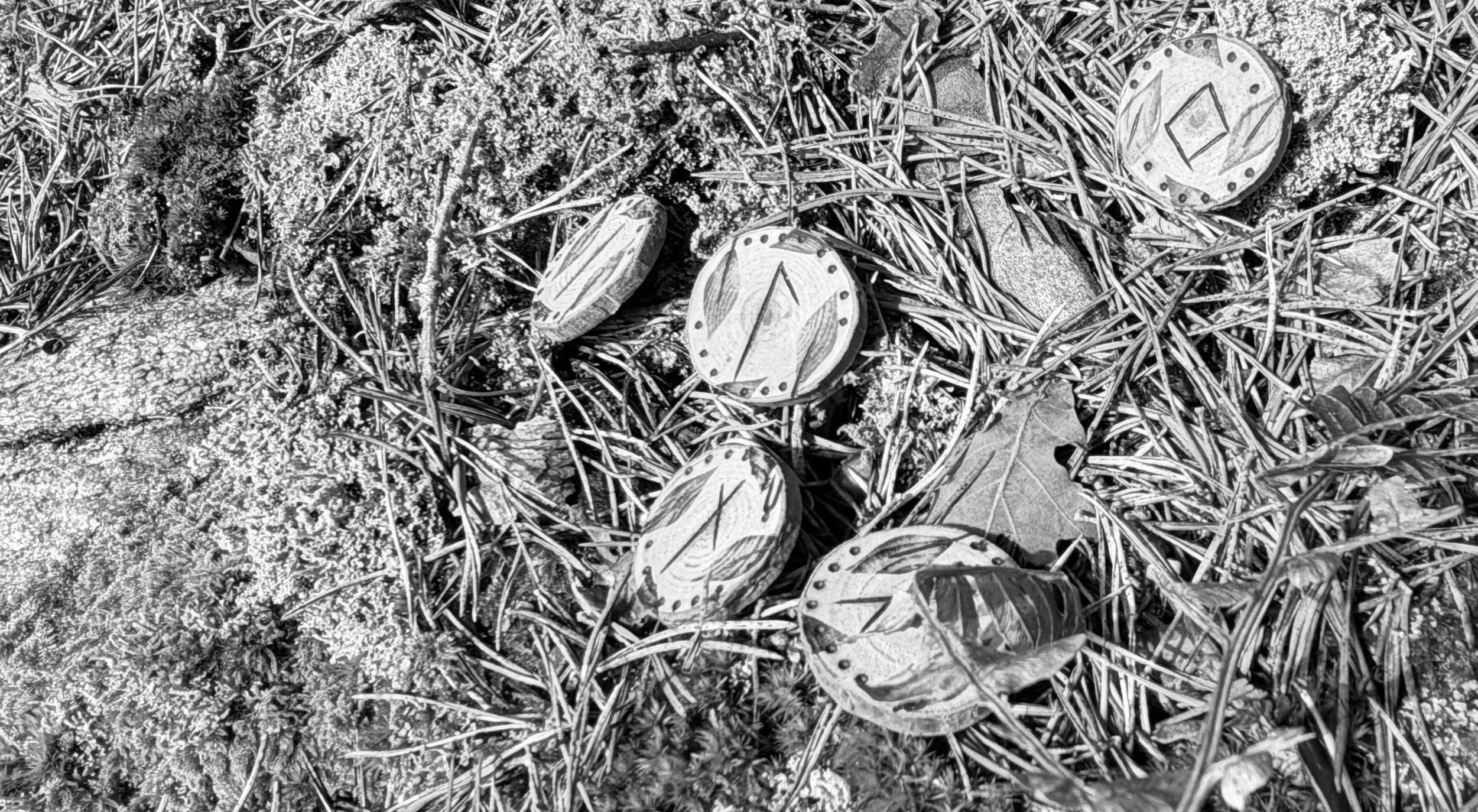
You can learn the names of the runes, their core meanings, and how they have been understood both historically and in a contemporary context. You can also draw a rune when seeking guidance, reflection, or a new perspective.
In the module/guide above, each rune is presented through what is known from language and research, but also through how it may be experienced and interpreted today. You will find reflections, examples of how runes can be used in meditation and sound practices such as galdr, and the opportunity to approach them at your own pace. The quiz helps you learn the signs and names step by step. If you wish, you can draw a rune and see what reveals itself.
At their core, runes are a writing system, but over time they have also carried meaning, symbolism, and sometimes magical significance. Much of what we know rests on linguistics, archaeology, and interpretations of older sources. At the same time, there is space between the lines where experience, intuition, and presence can take form.
The interpretations in this guide are mine (Nicklas Rudolfsson). They are grounded in what I have been able to study and understand, but also shaped by personal encounters, reflections, and work with the runes. They are not intended as definitive answers, but as an opening.
Runes belong to no one, yet they speak to those who listen.
If you want to learn more about the background and why the Elder Futhark resonates with me, read more in this article: Runes and I – a personal relationship with the Elder Futhark
Note: The module/plugin may be extensive and difficult to navigate on smaller mobile screens. For the best experience, it is recommended to use a desktop or a device with a larger display.